2026年11月3日
English
Japanese
Minato Unesco Association

“Experiencing La Traviata Through Voice and Piano – Discovering the Secrets of Opera”
The Second 2025 Cross-cultural Awareness Workshop
“Welcome to the World of Italian Opera”
“Experiencing La Traviata Through Voice and Piano – Discovering the Secrets of Opera”
Lecturers:
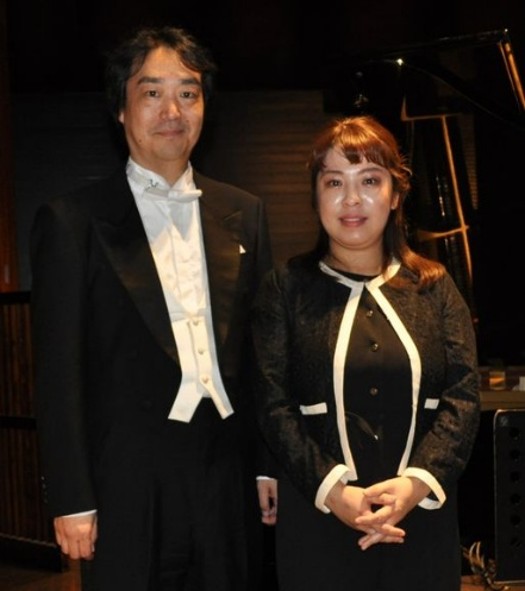
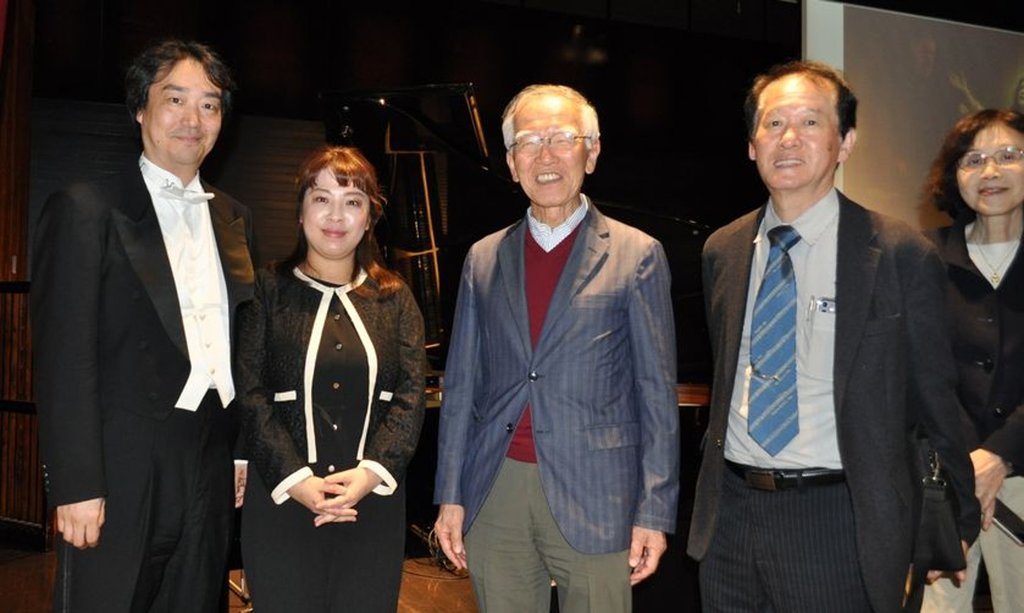
Mr. WATANABE Dai, Tenor Opera Singer
Ms. WATANABE Yuriko, Pianist
Date: Sat., October 25, 2025, 2:00–4:00 p.m.
Venue: Libra Hall, Minato City Gender Equality Center
Part I: The Secrets of Opera
- The Birth of Italian Opera (16th Century)
Claudio Monteverdi pioneered a style that used intricate musical notation to vividly portray movement and emotion. - Experiencing Recitativo Secco (“Dry Recitative”)
- A style in which words flow freely over simple, “dry” chordal accompaniment. Widely used in 17th- and 18th-century operas, recitativo secco is typically accompanied by a harpsichord and a bass instrument such as the cello, allowing singers to deliver the text in a speech-like, flexible rhythm.
Vocal Performance: Mozart, The Marriage of Figaro, Act I (immediately before No. 7)
Secco vs. Accompagnato: Two Faces of Operatic Storytelling
Unlike recitativo secco, recitativo accompagnato is supported by the orchestra, creating a more dramatic and expressive form of sung narration.
Vocal Performance: Excerpt from Act I, No. 2 of Mozart’s Don Giovanni
- The Maturity of Opera Buffa and the Art of Bel Canto
- Opera buffa, a comic form of opera depicting everyday life, reached its artistic peak alongside the development of bel canto. Meaning “beautiful singing,” bel canto is the traditional Italian vocal style established in the 17th and 18th centuries, characterized by a warm, lyrical tone and smooth, flowing melodic lines.
Vocal Performance: “Una furtiva lagrima” from Donizetti’s L’elisir d’amore
- Verdi’s Iconic Melodies and Dramatic Irony
- Verdi’s unforgettable melodies often carry hidden dramatic significance, transforming memorable tunes into emotional “poison arrows” within the story.
Vocal Performance: “La donna è mobile” from Verdi’s Rigoletto
- Opera’s Rhythm and Poetry
- An introduction to the Italian tradition of syllabic verse, in which poetic lines are measured according to the number of syllables and the placement of accents, while taking vowel combinations into account.
Piano Performance: “Mi chiamano Mimì” from Puccini’s La Bohème
- A Bridge to Modern Opera: Cilea’s L’Arlesiana and the Weight of Verismo
- The lecture explored how Francesco Cilea’s work represents the realism and emotional intensity of the verismo tradition.
- The Legacy of Melody After World War II: Ennio Morricone
- After World War II, government support helped stabilize opera houses, but commissions for new operas declined, leading to an increasingly conservative repertoire. Many leading composers turned their attention to new forms of musical theatre, while the rapid expansion of the film industry created fresh opportunities. As a result, numerous composers—including Ennio Morricone—made their greatest contributions through film music rather than the operatic stage.
Piano Performance: Excerpt from Morricone’s New Cinema Paradiso Finale
Vocal Performance: “Nessun dorma” from Puccini’s Turandot
Part II: The World of La Traviata
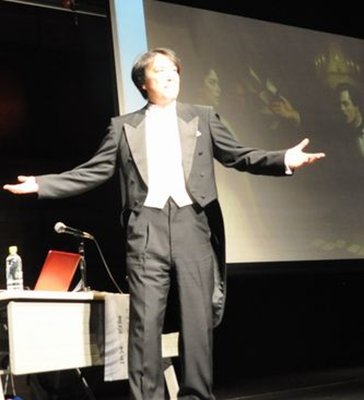
- Opening: Prelude — The Theme of Transience
- The audience was invited to experience La Traviata through the combined power of music, words, and stage performance.
- The Opera
Composed by Giuseppe Verdi with a libretto by Francesco Maria Piave, La Traviata premiered in Venice in 1853. - The Main Characters
- Violetta – a celebrated courtesan and the star of Parisian high society
- Alfredo – an honest and sincere young man
Germont – Alfredo’s conservative father, who values family honor above all else and interferes with the lovers’ relationship
Act I – The Evening Party: Love at First Sight and a Hint of Tragedy
In mid-19th-century Paris, the elegant home of the renowned courtesan Violetta is the setting for lavish evening parties. At one such gathering, the young Alfredo enlivens the celebration by singing the famous “Libiamo ne’lieti calici” (Drinking Song). When the two are finally alone, he confesses the love he has long cherished for her. His heartfelt sincerity deeply moves Violetta, who begins to question the life she has always known. The joyous drinking song marks the beginning of Alfredo’s determined pursuit and Violetta’s inner conflict.
Vocal Performances: ” Libiamo ne’lieti calici (Drinking Song)” / Love Duet
Piano Performance: “Sempre libera”
Act II (First Half) – The Country: Happiness and the Beginning of Sacrifice Living happily together in a country house outside Paris, Violetta secretly supports their life by selling her possessions. While Alfredo is away, his father Germont arrives, determined to rescue his son from what he believes is a destructive relationship with a courtesan. Despite Violetta’s desperate pleas, he persuades her to sacrifice her own happiness for Alfredo’s future. She writes a farewell letter and leaves him. Unaware of the truth, Alfredo reads the letter, is overcome with anger, and rushes back to Paris in pursuit of her.
Vocal Performances: “Di Provenza il mar, il suol” (Burning Heart) / “Amami, Alfredo”
Act II (Second Half) – The Ballroom: A Father’s Calm and a Public Tragedy
That evening, Violetta arrives at a party hosted by one of Alfredo’s friends, accompanied by her patron, Baron Douphol. After winning a large sum of money at the gaming tables, Alfredo begs Violetta to return to him. When she refuses, he publicly humiliates her by throwing his winnings at her feet before the assembled guests.
Piano Performance: “Di Provenza il mar, il suol”
Vocal Performance: “Questa donna conoscete?”
Act III – The Sickroom: A Letter, Reunion, and the Final Promise
Several months later, Violetta lies gravely ill with tuberculosis in her Paris home, facing the end of her life. Alfredo, having finally learned the truth from his father, rushes to her side. He begs for her forgiveness, and the two dream of beginning a new life together. But it is too late. Violetta dies peacefully in Alfredo’s arms.
Piano Performances: Opening excerpt / “Parigi, o cara” (excerpt)
Vocal Performance: “Parigi, o cara”
After forgiveness comes one brief moment in which hope returns before Violetta quietly transcends this world. Piano Performance: Closing excerpt
(Written by UMENE K., International Science and Culture Committee, and translated by SUDA Y., PR & Internet Committee Associate)