2026年11月3日
English
Japanese
Minato Unesco Association

“A Journey to Discover the Charms of Hungary: Exploring History, Culture, and Cuisine”
FY2026 1st Lecture on International Understanding
“A Journey to Discover the Charms of Hungary: Exploring History, Culture, and Cuisine”
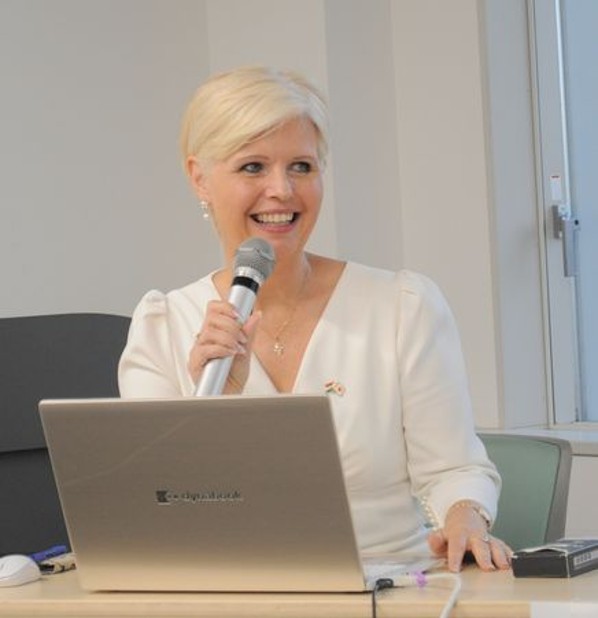
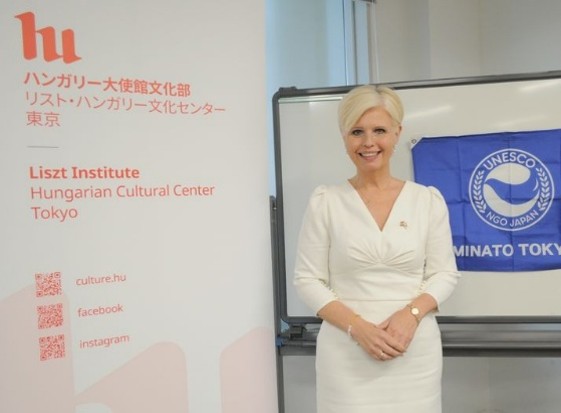
Speaker: Ms. Krisztina Merényi, Counsellor at the Embassy of Hungary /Director of the Liszt Institute – Hungarian Cultural Center
Date & Time: Saturday, June 13, 2026, 14:00–16:00
Venue: Minato City Gender Equality Center “Libra
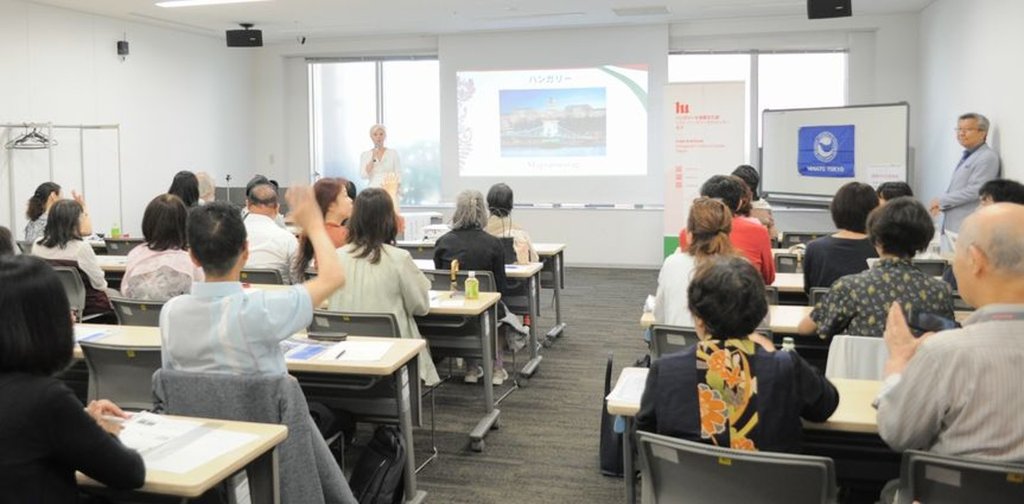
Ms. Krisztina Merényi gave a presentation—delivered in excellent Japanese and filled with humor—introducing Hungary’s history, culture, cuisine, and tourism highlights. All participants also had the opportunity to taste the traditional baked pastry known as *Kürtőskalács* (chimney cake).
Basic Information about Hungary
・Located in the heart of Europe (Central Europe); approximately 9,100 km and a 17-hour flight from Japan. Situated in the center of the Carpathian Basin.
・Area: 93,030 km²; Population: Approx. 9.5 million (as of June 2026). Capital: Budapest.
・Major rivers: Danube, Tisza. Highest mountain: Kékes (1,014 m).
・Climate: Continental (hot summers, cold winters); no high mountains; four distinct seasons; an agricultural nation.
・Language: Hungarian belongs to the Uralic language family and shares grammatical similarities with Japanese; the people originated as nomadic tribes migrating from the region of Mongolia.
・Currency: Forint; exchange rate as of June 2026 is approximately 530 JPY for 1,000 Forints.
【History of Hungary】
・1st–5th Centuries: During the Roman Empire era, the capital was Aquincum (“City of Waters”); many Roman-era ruins still remain in the Buda district today.
・Nation founded in 896; crowned by the Pope in 1000, marking the birth of the Kingdom of Hungary; a country founded on Christian culture, with the majority of the population being Roman Catholic.
・The first king was Saint Stephen; August 20th marks the founding of the nation (Saint Stephen’s Day).
・Ruled by the Mongols from 1241 to 1242; many fortresses were constructed during this period.
・Ruled by the Ottoman Empire for 150 years (1541–1686); Turkish baths and mosques were built. ・Following the Second Siege of Vienna (1683) and the Great Turkish War, the territory came under Habsburg rule in 1699.
・After the Hungarian Revolution of 1848, Franz Joseph established the Austro-Hungarian Empire in 1867 and recognized the autonomy of the Kingdom of Hungary.
・Empress Elisabeth married Franz Joseph at the age of 16. She spent her summers living in a palace in Hungary, having moved there from Vienna. Born in Germany, she became proficient in Hungarian and excelled at horse riding and dancing.
・Lost two-thirds of its territory under the Treaty of Trianon following World War I (1920).
・Hungary and Germany were defeated in World War II; approximately 70% of the buildings in Budapest were destroyed.
・The Hungarian People’s Republic era (1949–1989): a socialist period under Soviet influence.
・Russian language instruction was part of compulsory education.
・During this time, the Hungarian Revolution of 1956 saw an uprising against the Soviet Union, but the country was subsequently invaded by Soviet troops.
・Transitioned to democracy in 1989, becoming a free republic. Joined NATO in 1999 and the EU in 2004.
【Capital City: Budapest】
・Composed of 23 districts and divided by the Danube River into the Buda and Pest sides; population of approximately 2 million.
・Budapest was established in 1873 through the merger of the three towns of Buda, Óbuda, and Pest.
・Budapest’s Danube riverbanks, the Buda Castle District, and Andrássy Avenue are designated World Heritage Sites; the city is known as the “Pearl of the Danube.”
・Key attractions include the Chain Bridge; the Buda district’s Castle Hill and Fisherman’s Bastion; the Pest district’s Parliament Building and St. Stephen’s Basilica; the oldest subway line in continental Europe (Line 1); the Castle Hill Funicular; the Children’s Railway; sightseeing dinner cruises; the Hungarian State Opera House; the House of Music (designed by Japanese architect Sosuke Fujino); and the Liszt Academy of Music (with its 150-year history).
【Budapest Suburbs and Regional Areas】
・Szentendre (known as the “Artists’ Town”), the Pannonhalma Abbey and Church, and Lake Balaton.
・Northeastern region: Eger (a key Catholic center known for dry red wine), Tokaj (famous for noble rot wines), and Hollókő Village (featuring a fortress and traditional costumes worn during Easter events).
【Hungary: A Nation of Thermal Baths】 ・Boasts some of Europe’s most abundant thermal water resources, with 1,300 springs and over 200 thermal bath facilities.
・Key thermal sites include Lake Hévíz (the world’s largest thermal lake) and Budapest’s Király, Rudas, Gellért (currently closed long-term), and Széchenyi baths.
・Bathing in Hungarian thermal waters typically requires swimwear; many facilities offer exercise areas, and the waters are used for therapeutic and medical purposes.
・Thermal elements are utilized in beauty and wellness products, such as cosmetics, creams, and mud packs.
【Hungarian Cuisine, Wine, etc.】
・Famous dishes featuring paprika include veal stew, goulash soup, and *lángos* (deep-fried dough); these are popular choices for souvenirs. The country is also a major producer of foie gras.
・Hungary boasts a thriving café culture and a wide array of signature sweets, such as *kürtőskalács* (chimney cake).
・There are 22 Hungarian wine regions, producing renowned varieties like *Bikavér* (Bull’s Blood) and *Tokaji Aszú*.
【Others】
・Notable composers include Liszt, Bartók, Kodály, Lehár, and Kálmán.
・Watch a video performance of Franz Liszt’s “La Campanella.”
・The country has produced a large number of Nobel laureates, boasting one of the highest per-capita rates of winners in the world.
・Participated in the Osaka-Kansai Expo, and welcomed a large number of visitors. ・There are 27 Liszt Hungarian Cultural Centers worldwide, including one in Azabu-Juban, Minato City, Tokyo.
(Written by UMENE Keichiro, Standing Director, the International Science & Culture Committee, and translated by MIYASHITA Y., Standing Director, the PR & Internet Committee)