2026年11月3日
English
Japanese
Minato Unesco Association

“Bonsai through the eyes of an American; Encounters and Fascination”
Minato UNESCO Salon
“Bonsai through the eyes of an American; Encounters and Fascination”
Speaker: Megan Scarlet Keys, Coordinator for International Relations,the Omiya Bonsai Art Museum
Date: Saturday, May 30, 2026
Venue: Minato City Life-long Learning Center
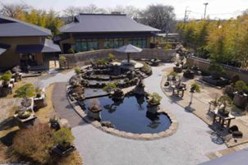
As the Minato UNESCO Association, we have held several “Bonsai: Demonstration and Hands-on Experience” events over the years under the guidance of Seikōen. Through this connection, we were given the opportunity to host a program jointly with the Omiya Bonsai Art Museum, located in the historic Omiya Bonsai Village with a history of over 100 years.

Scarlet-san is originally from Utah, where the 2002 Winter Olympics were held (and scheduled again for 2034). At age 19, she spent a year and a half in several rural areas of Kansai as a volunteer missionary for her church. She fell in love with the Japanese language, and after returning to the U.S., majored in Japanese in both university and graduate school, later becoming a Japanese-language teacher. Until last spring, she had been teaching Japanese in the United States. After that, wishing to live in Japan and further improve her Japanese, she applied for the JET Program and was assigned to Omiya—where she unexpectedly encountered the world of bonsai. Since last July, she has been working as a Coordinator for International Relations (translation and interpretation) at the Omiya Bonsai Art Museum. She has now become completely captivated by bonsai and shared its charm with us.
“What is Bonsai?”
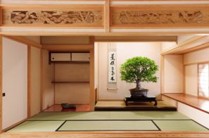
Bonsai is not a special species or variety of tree. Any tree can be planted in a shallow pot to restrict root growth, and its shape is refined through pruning. That is bonsai. So, does creating bonsai mean starting from sowing seeds, watering, repotting, and waiting decades? Of course, that method exists, but bonsai is also created through yamadori (collecting trees from the mountains), as well as cuttings and grafting. If you start bonsai today, yamadori allows you to skip about 20 years.
Teire (Care)
Daily watering—this is everything. In addition, repotting every three to four years is essential.
Types They are broadly divided into two categories:
- Shōhaku (conifers)
- Zōki bonsai (deciduous trees): flowering, foliage, and fruit-bearing varieties
Jukei (Forms)
She explained various bonsai styles—such as moyōgi, kengai, hankengai, fukinagashi, group plantings, hōkizukuri, chokkan, sōkan, bunjingi, rock-grown, shakan, clump style—through a quiz that matched photos with names. This helped participants discover their own preferences.
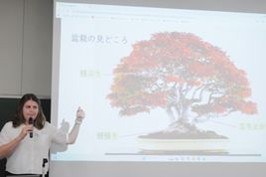
Midokoro (Points of Appreciation) First, lower your posture and look up from below to feel the presence of a great tree. Observe the 16 roots, the trunk’s rise, the branching (the art of pruning), and each leaf’s color and shape. Jin (dead branches) and Shari (dead trunk sections): Parts of the trunk or branches may die and remain as they are. The exposed white wood creates a beautiful contrast with the green foliage. Front and Back: Like a face and a back, bonsai has a front and rear. The front is determined by how the trunk rises. Bonsai that appears to bow slightly is especially charming.
At the end, she concluded her talk with the question: “What does bonsai mean to me?”, using a metaphor from life.
A tree in an orchard had grown freely without care—its branches overgrown, bearing no fruit. Seeing this, a gardener pruned it drastically. The tree looked weak and shabby. The tree protested: “Why did you make me look so disgraceful? I wanted to live freely.” The gardener replied, “This is for your sake. When you bear fruit, you will understand.” “Sometimes pruning is necessary. It is guidance for growth.” A gardener—like a mentor in life—must prune at times to help one grow.

Bonsai, too, is just a tree. It may dislike being pruned or wired. But a bonsai artist cherishes the tree and understands what is best for it. Without that necessary pain, it may not be worthy of display. When we endure hardship and overcome it, we become better human beings.
To her, bonsai symbolizes resilience, elegance, and strength—a powerful emblem.
Eighteen participants attended Scarlet-san’s salon, held in Japanese, where she conveyed the charm of Japan’s traditional culture, bonsai, discovered through her encounter with Japan. She engaged the audience with quizzes on various themes, drawing interest and curiosity—truly the work of a “teacher.”
(KOBAYASHI Takayuki, Vice President, and translated by TANAHASHI S., the PR & Internet Committee)