2026年1月28日
English
Japanese
Minato Unesco Association

“Viewing the Waterfront from the Sea & Observing Marine Life”
Exploring Tokyo’s Forests, Rivers, and Sea – Series No. 8
“Viewing the Waterfront from the Sea & Observing Marine Life”
– The Connection Between Canal Ecosystems and Our Lives –
Date & Time: Saturday, January 31, 2026, 9:30–14:00
Venue: Hinode Pier, canals of Minato City, and the mouth of the Furukawa River
Lecturer: Professor SASAKI Tsuyoshi (Tokyo University of Marine Science and Technology, Department of Marine Policy and Culture; Ph.D. in Fisheries Science)
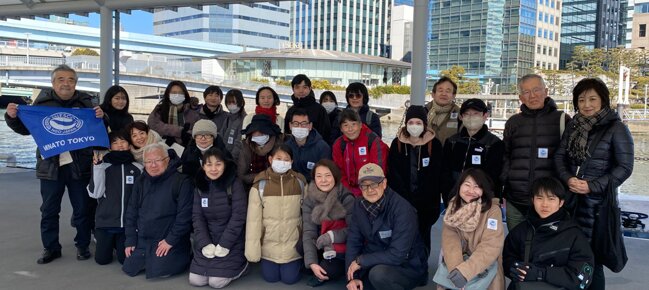
Despite the coldest season of the year, we were blessed with fine weather and welcomed 27 participants, including students from Tokyo University of Marine Science and Technology (TUMST).
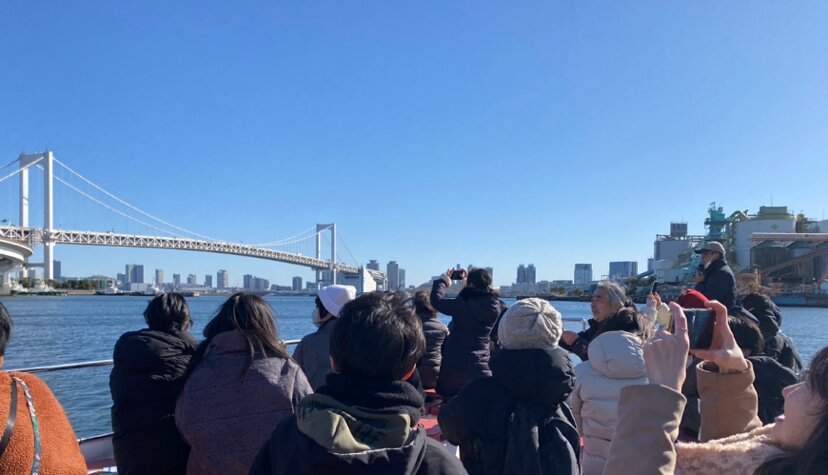
1) Departure from Hinode Pier: Plankton Sampling and Water Observation
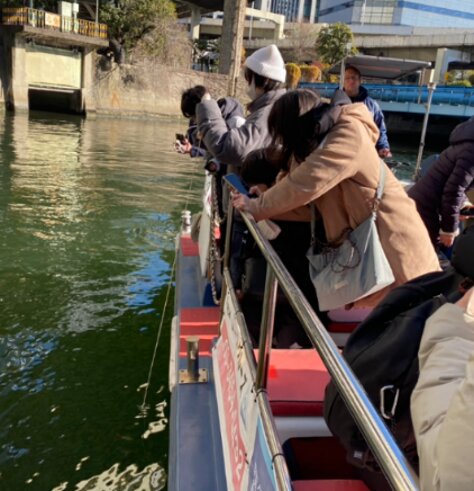
After departing from Hinode Pier, participants conducted plankton collection and water sampling to study the natural environment of the canals—artificial waterways originally developed for transportation, drainage, and water supply along Tokyo Bay.
Water samples were taken in brackish areas where river water and seawater mix, measuring water quality at both surface and bottom layers, including temperature, salinity, and COD (an indicator of water turbidity).
As the boat proceeded, participants also learned about the historical background of the Shibaura area. Around Shibaura 1-chome (Jubako-bori), once home to facilities of Toshiba, the area historically served as a place for recuperation and seaside recreation. It is also where the Fisheries Training Institute (now Tokyo University of Marine Science and Technology) was established in 1888. The area represents the final point of water flow originating from the Musashino Plateau, including sources from Ome and Hamura, as well as natural springs from Shinjuku and Azabu, all eventually flowing into Tokyo Bay.
Minato City Mayor Ms.SEIKE has expressed a vision of making Minato City “the Venice of the East,” known as the city of water. Professor SASAKI strongly supported this idea and recited a verse from the Chinese poem “Mooring by Maple Bridge at Night” (by Zhang Ji), evoking the image of another water city, Suzhou, and expressing his aspiration to help create such a landscape in Shibaura.
2) Environmental Measures and Remaining Challenges
Participants observed the “crab-friendly revetment,” where approximately 10,000 crabs now inhabit and spot-billed ducks have also settled. Over the past decade, iron pellets have been introduced into the water to promote the growth of phytoplankton (diatoms) by supplying iron ions, while also helping absorb harmful substances such as hydrogen sulfide, thereby contributing to water purification.
During the cruise, an orange oil fence came into view. While wastewater from 10 of Tokyo’s 23 wards is treated at the Shibaura Water Reclamation Center, excess water during heavy rainfall is discharged from such points. The volume of overflow remains a significant issue. It was also explained that there are approximately 600 locations in Tokyo where untreated sewage may be discharged, highlighting ongoing challenges in improving the marine environment.
3) Observation of Marine Life and Water Quality
Collected plankton samples were visible even to the naked eye. Measurements showed both surface and bottom water temperatures at 10.0°C (normally, bottom water is slightly warmer). Surface salinity was 1.5, while bottom salinity is typically around 3.5.
This condition, where freshwater overlies denser seawater, is known as a “salt wedge,” in which seawater intrudes beneath river water and moves upstream. Organisms skillfully utilize this flow for vertical, horizontal, and rotational movement, allowing them to remain in estuarine areas. As plankton gather, food chains develop, ultimately supporting human habitation and urban formation.
4) “What Kind of Place is Shibaura?”
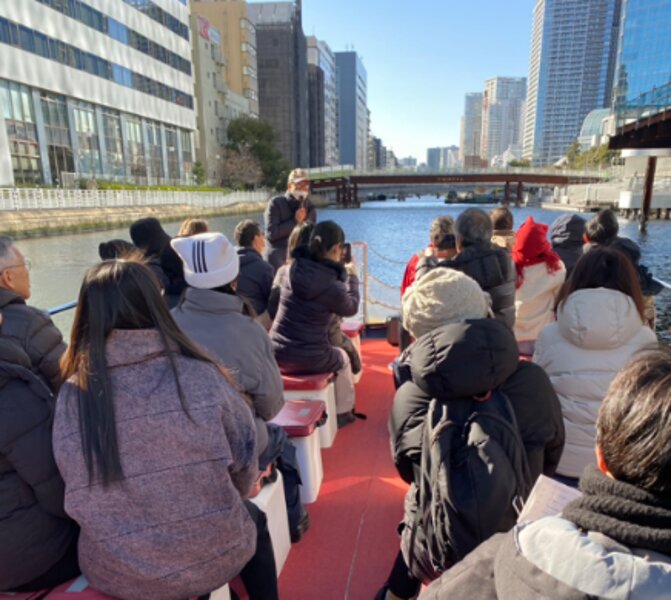
During the cruise, participants shared their impressions of Shibaura, mentioning images such as reclaimed canals, refreshing breezes, traditional houseboats, a center of Tokyo’s fishing industry, the birthplace of sushi culture, and local fishermen.
5) Group Work After Disembarkation
After returning to Hinode Pier, participants engaged in group discussions on the future of Shibaura and presented their ideas. Comments included:
- Renewed awareness of pollution caused by wastewater
- The importance of interaction with waterfront environments
- The need for careful handling of detergents and oils
- Understanding biodiversity and the role of individual efforts
- Hopes to increase fish populations in the future
- Recognition of ecological connections
- Proposals to expand water transport routes and fishing opportunities
- The importance of maintaining water quality
- A deeper sense of personal responsibility toward water environments
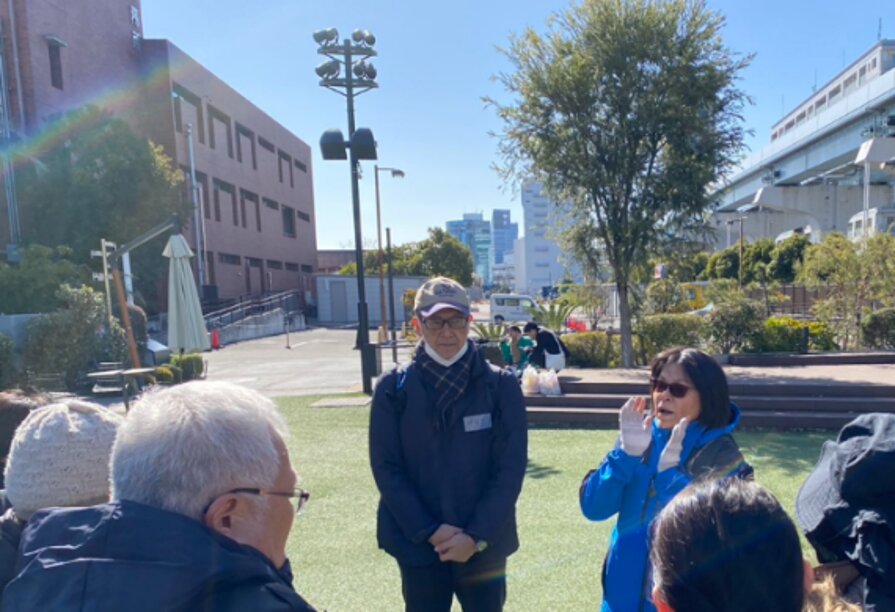
6) Afternoon Talk by Ms. SUZUKI Harumi
In the afternoon, Ms. SUZUKI Harumi, who operates fisheries at the mouth of the Furukawa River near Kanasugibashi Bridge, gave a talk. She explained that Tokyo Bay yields conger eel, clams, Tigar Prawn, and sea bass, and that nori (Asakusa nori: seaweed) was once cultivated there. She expressed her wish to continue providing delicious seafood in the future.
She also noted that small set nets off the coast of Haneda catch species such as sea bass, cutlassfish, yellowtail, and flounder. Through her work with elementary school students, she has observed growing awareness of environmental issues, including invasive species, marine debris, plastic bags, and PET bottles.
Challenges such as the loss of shallow coastal areas due to concrete revetments—critical for spawning—and oxygen-deficient waters affecting plankton survival were also discussed. Efforts such as creating artificial shallows using transported sand are underway. She emphasized the importance of maintaining a shared commitment to keeping the sea clean.
7) Conclusion
Every September, the Shibaura “Suijin-sama” (water god/deity) festival is held to pray for abundant catches and safe navigation. At the same time, the day’s activities reminded participants that maintaining a healthy marine environment is the responsibility of those who live there.
Professor SASAKI concluded:
“This program has helped deepen interest in Tokyo’s marine environment. I hope participants felt that their daily lives are connected to the sea, and that this connection will continue into the future.”
This marked the successful completion of the 8th session of the “Exploring Tokyo’s Forests, Rivers, and Sea” series, which has explored Minato City’s marine environment from the perspectives of forests, rivers, and coastal areas.
(Written by KOBAYASHI Takayuki, Vice President, and translated by SUDA Y., the PR & Internet Committee Associate)