2026年11月3日
English
Japanese
Minato Unesco Association

West Indian Cooking Class
Introducing Global Culinary Cultures
West Indian Cooking Class
Instructor: Ms. Purva Ponkshe
Date & Time: Saturday, February 28, 2026, 12:00 PM – 3:30 PM
Venue: Cooking Room, Minato City Gender Equality Center “Libra”
Participants: 18 local residents, 1 instructor, 8 staff members
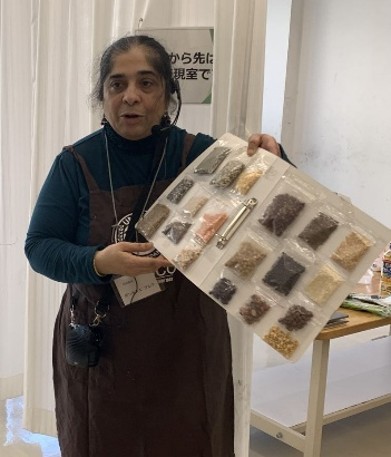
Following the highly acclaimed West Indian cooking class held in July 2023, we hosted a second session. This time, the class focused on traditional West Indian cuisine using Japanese winter vegetables. Once again, the instructor was Ms. Purva Ponkshe, a native of Pune in the state of Maharashtra, western India. Ms. Ponkshe first came to Japan in 1993 after getting married. She passed the former N1 level of the Japanese Language Proficiency Test in 2004 and currently teaches West Indian home cooking while continuing her own studies of Japanese kanji.
Today’s menu:
① Puri (crispy deep-fried bread with spinach)
② Refreshing Indian-style salad with sprouted beans
③ Fluffy, spiced Indian-style cabbage rice
④ Home-style butter chicken curry
⑤ Semiya Payasam (an Indian-style dessert made with vermicelli noodles) ⑥ Masala Chai (Indian-style milk tea)
① “Puri” is a deep-fried flatbread made from a dough of whole wheat flour (atta), spinach, and potatoes. It is crispy yet chewy, offering a distinct, savory spinach flavor. It is served alongside a piece of deep-fried, salty papad
② The “Refreshing Indian-Style Sprouted Bean Salad” features green beans and Indian moth beans that Purwa-san sprouted herself, starting the process the morning before bringing them in. A generous amount of these sprouted beans is tossed with fresh vegetables—such as red onion—and dressed with lemon juice, seasonings, and a final touch of oil infused with heated spices like mustard seeds. It is a salad that delights the palate with the contrasting textures of tender beans and crisp raw vegetables, all brought together by the tang of lemon and the aromatic flavor of spices.
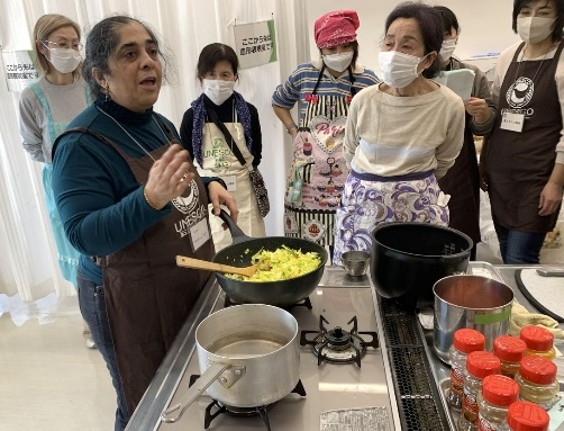
③ “Indian-style Cabbage Rice with a Subtle Spiced Flavor” was made by cooking Basmati rice, a blend of spices, and Japanese winter cabbage in a rice cooker. I used 2.5 times the amount of water relative to the rice, but since the cabbage releases moisture, I think using slightly less water would have better achieved the characteristic of fluffy, distinct-grain texture of Indian rice.
④ For the “Home-Style Butter Chicken Curry,” we used tandoori chicken that Purva-san had marinated overnight in spices and Greek yogurt. We simmered this with onions sautéed in ghee (Indian clarified butter), a paste made from fresh blended tomatoes, and heavy cream. I was deeply impressed by the complex depth of flavor—a wonderful harmony of aromatic spices, the savory taste of the chicken, and the fresh acidity of perfectly ripe tomatoes.
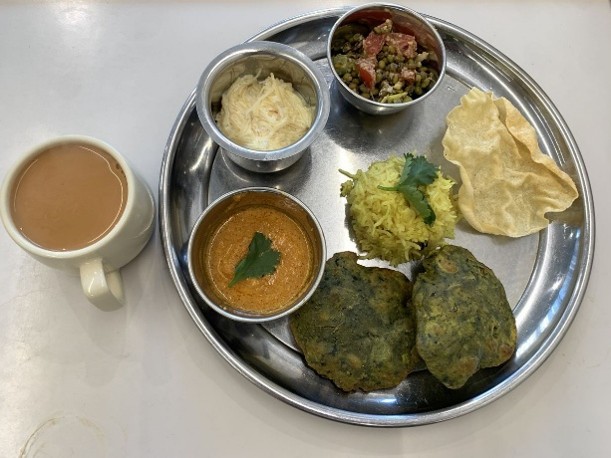
⑤ “Semiya Payasam” is a sweet dessert made by sautéing crisp, dried vermicelli (semiya) in ghee, simmering it in milk until tender, and adding sugar, cardamom, and saffron. The vermicelli offered a delightful texture—soft yet retaining the distinct feel of noodles—and the flavor was gentle, making it the perfect conclusion to a spicy meal.
⑥ “Masala chai” is an Indian-style milk tea made by heating water and sugar in a pot and adding black tea leaves, grated ginger, cardamom powder, and milk. The ginger is said to be added for its aroma and to help prevent colds.
In India, where there is a large vegetarian population, people obtain protein from legumes; Purwa-san explained that she regularly selects from various types of beans depending on the dish she is preparing. Incidentally, she noted that Japanese soybeans are not used in Indian cuisine. She also explained that there are specific rules regarding which ingredients are permitted or forbidden for different occasions—such as offerings to the gods, New Year’s meals, or family gatherings. The participants asked Purwa-san a wide range of questions, and she answered each one enthusiastically and without hesitation, drawing on her deep knowledge of food culture.
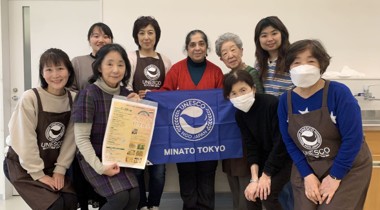
We extend our heartfelt thanks to Purva-san for the advance preparation and for introducing us to such a delicious and hearty spread of Western Indian cuisine. Thank you very much.
(YAMASAWA Emi, World Cooking Committee, and translated by Miyashita Y,. Standing Director, the PR & Internet Committee)